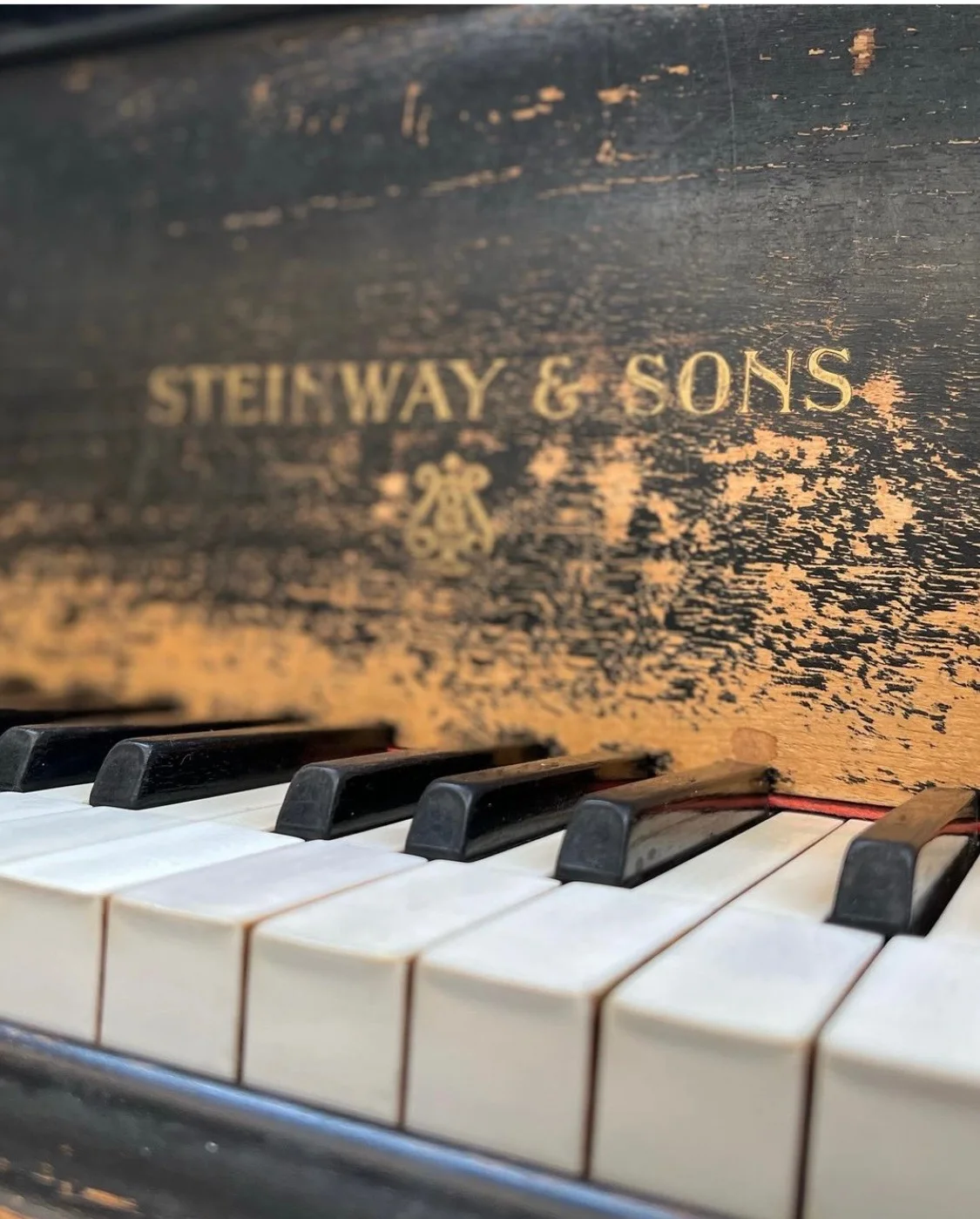
WORKSHOP NOTES · 2024
Rebuilt or restored? Understanding the difference
What lies beneath a beautiful cabinet, and the questions to ask before choosing a rebuilt piano.
Read the articleRESTORATION & CRAFTSMANSHIP
A FAMILY SPECIALISM
The Leverett family’s soundboard work reaches back to Colin and Derek’s time with Blüthner in the 1970s. The workshop describes more than 180 years of combined experience across its craftspeople.
Slow-grown Sitka spruce, carefully shaped for the individual instrument.
Discuss your piano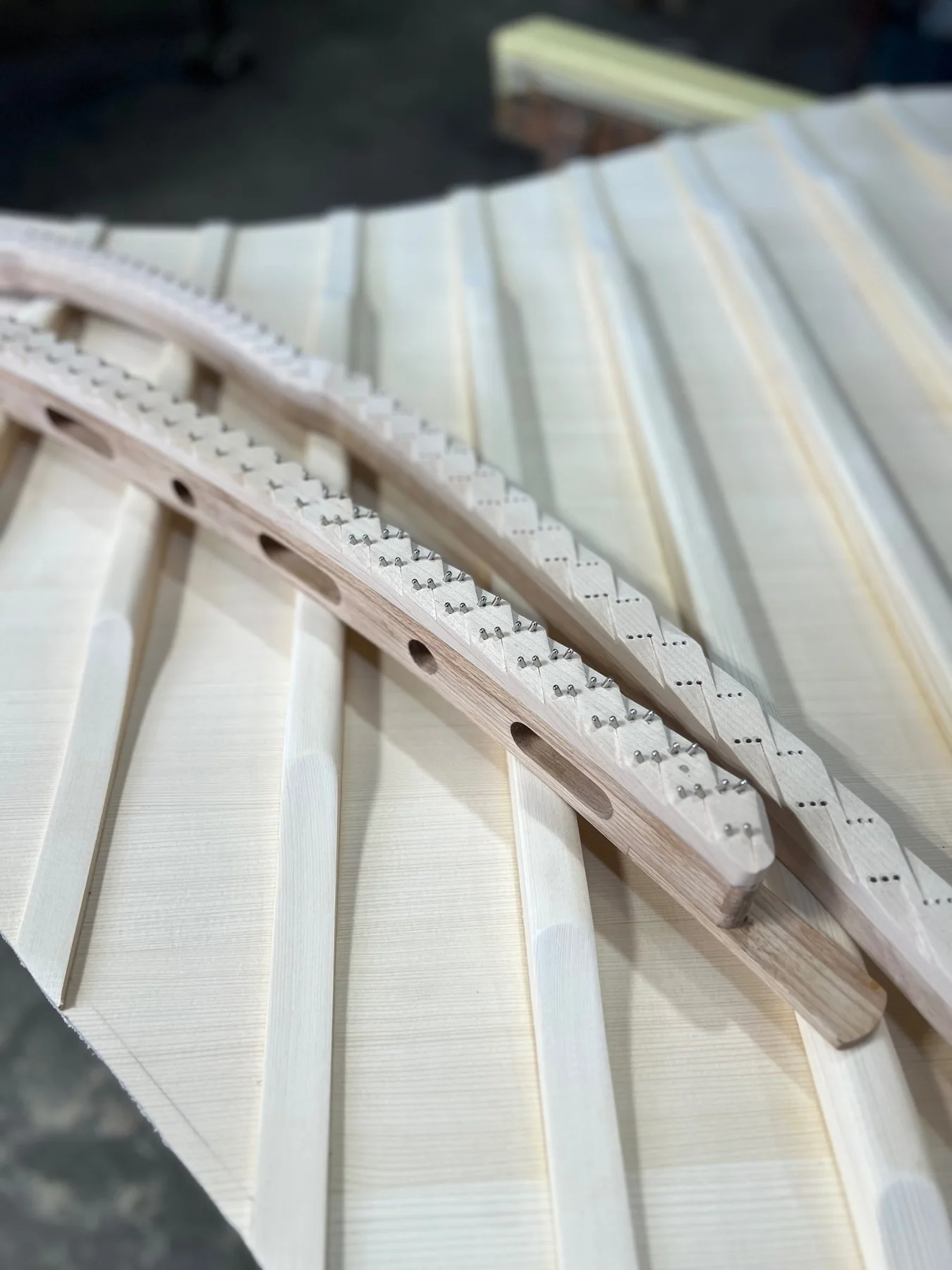
SOUNDBOARD ILLUSTRATIONS
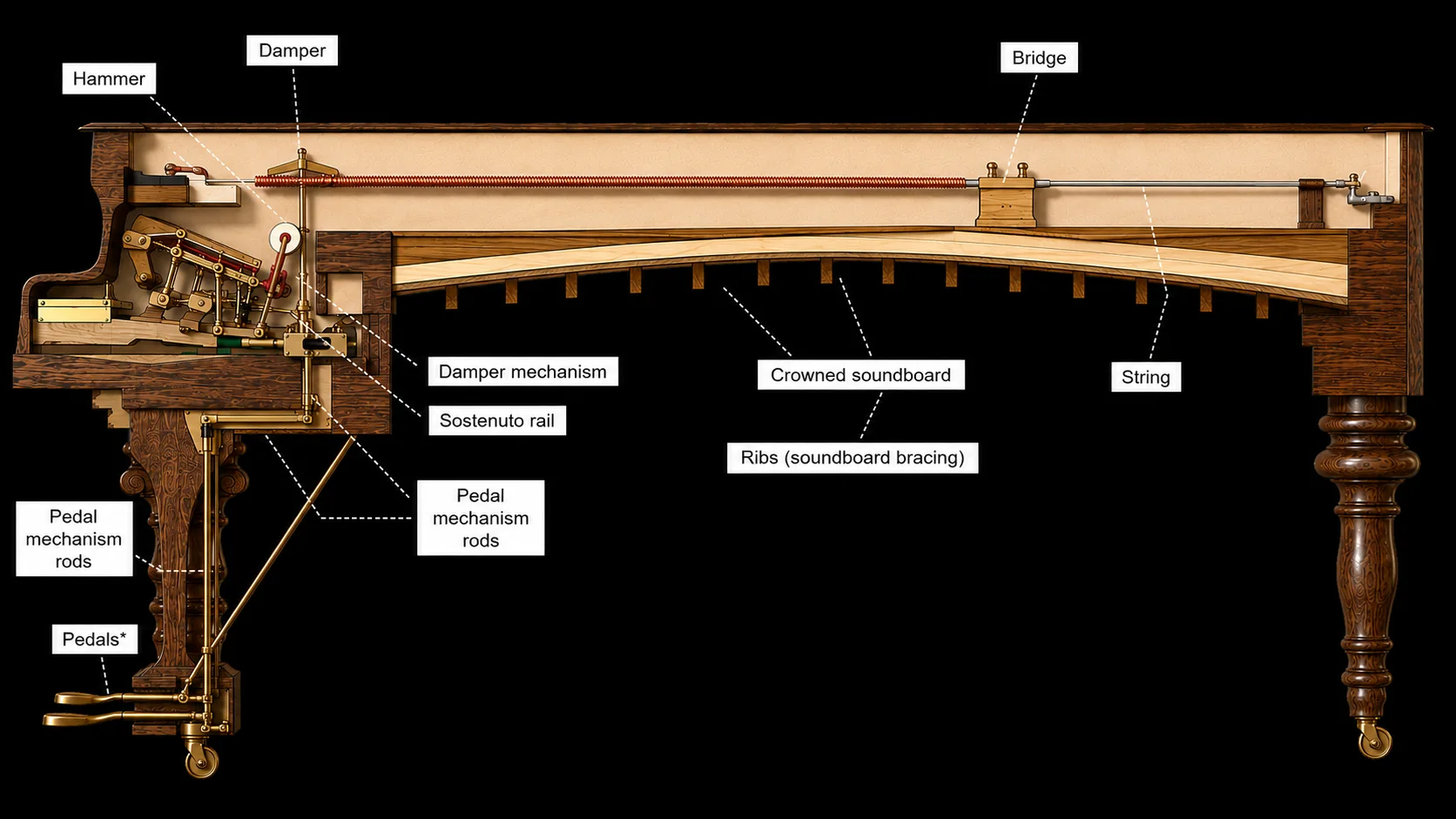
Explore the piano cutaway and soundboard crown illustrations. Select a view, or open the image full size to see its labels.
01 · THE ACOUSTIC HEART
The soundboard is the acoustic heart of the piano. When a hammer strikes a string, the vibration travels through the bridge and into the soundboard. Because the soundboard has a far greater surface area than the string, it moves a much larger volume of air, amplifying the vibration and creating the rich, powerful tone we recognise as the voice of the piano.
A well-made soundboard is formed with a shallow upward curve known as the crown. Together with the supporting ribs beneath it, this crown gives the board the correct strength, flexibility and resistance to the downward pressure of the strings. When these elements are properly balanced, the soundboard can vibrate freely and evenly, producing greater resonance, projection and sustained tone.
As a soundboard ages, its crown can reduce, flatten or even reverse. Wood is principally composed of cellulose fibres, which provide strength, and lignin, which binds those fibres together. Over many decades, repeated changes in humidity, temperature and mechanical loading can gradually alter this structure. The timber may become drier, more brittle and less elastic, making it increasingly susceptible to splitting and cracking. As the soundboard loses elasticity, it becomes less able to vibrate freely and efficiently, resulting in weaker projection, reduced sustain and a loss of tonal richness and resonance.
02 · STRUCTURE & RESONANCE
A properly crowned soundboard has a gentle convex curve. The strings rise over the bridge and descend towards the frame, creating the correct downbearing. When the crown, bridge height, string tension and bearing angles are correctly set, this geometry allows the soundboard to vibrate freely and produce a strong, sustained resonance.
A soundboard that has lost its crown may become flat or develop a reverse, concave curve. Although the string rises onto the bridge, it then continues upwards towards the frame, reducing or eliminating the correct downbearing. As a result, the string may lose firm contact with the bridge cap and pins, causing unwanted overtones, reduced sustain and a noticeable loss of resonance.
The condition and geometry of each piano are assessed before the work is agreed. Ask Paul to explain the findings for your instrument.
03 · AT THE BENCH
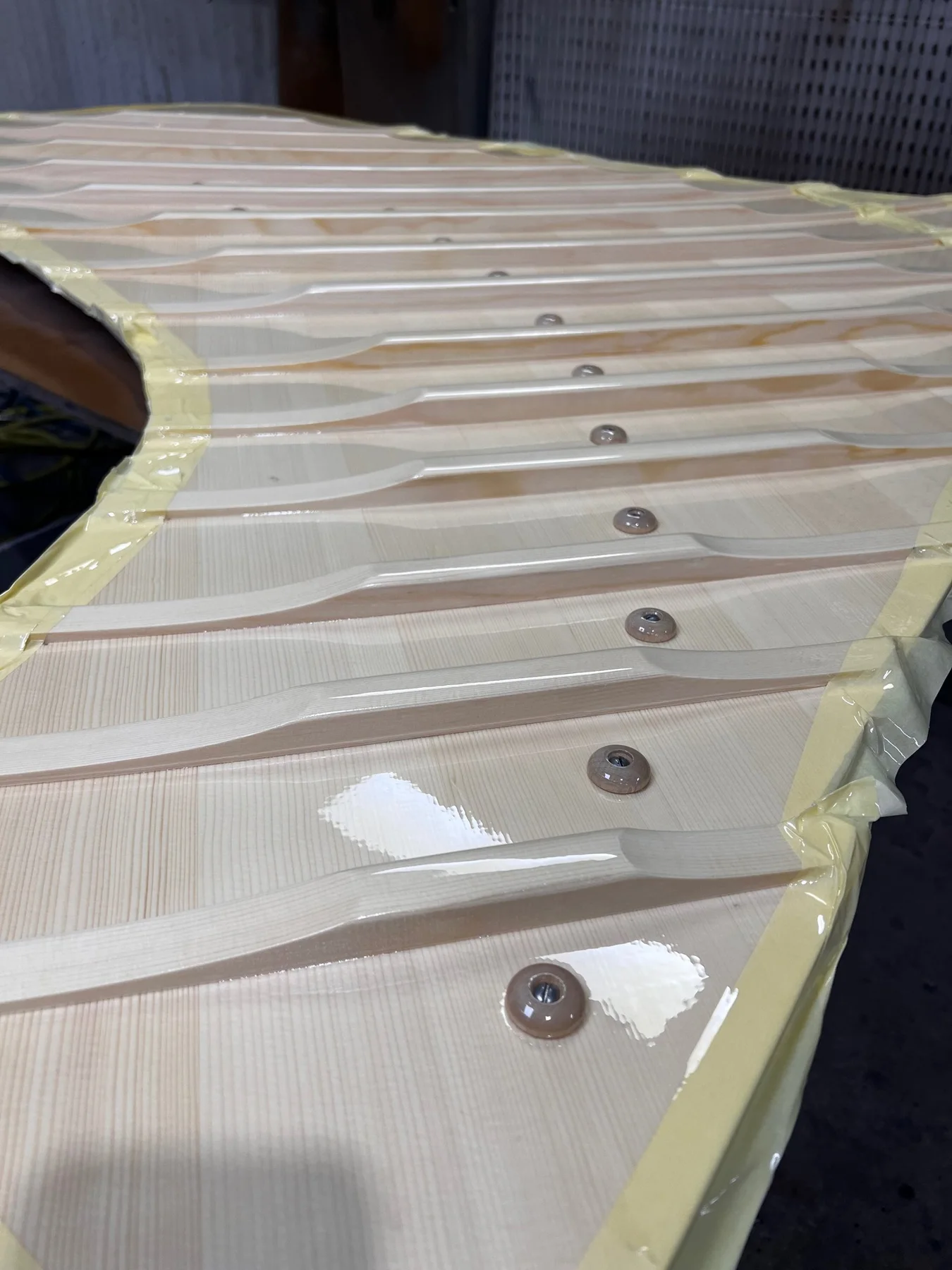
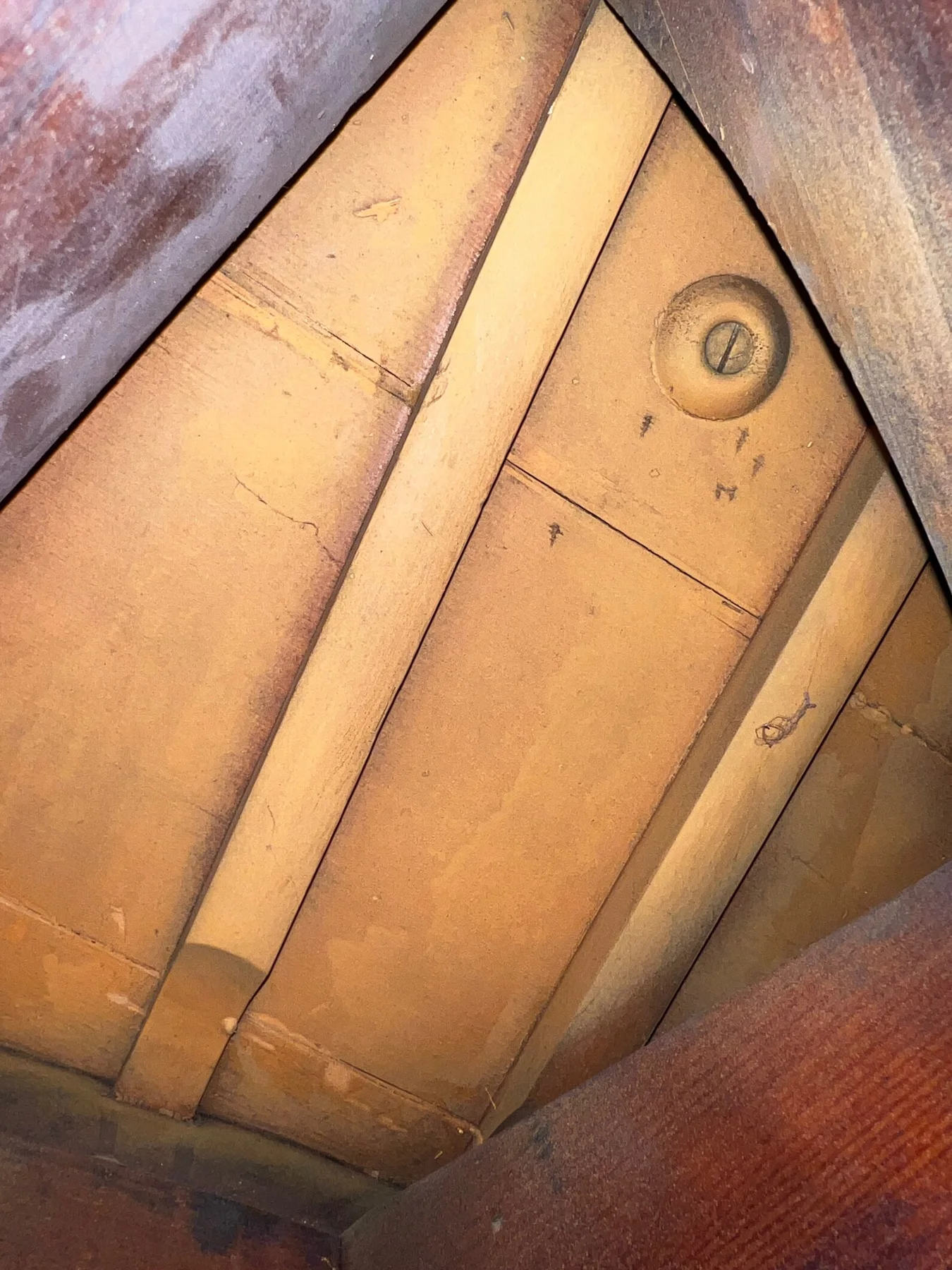
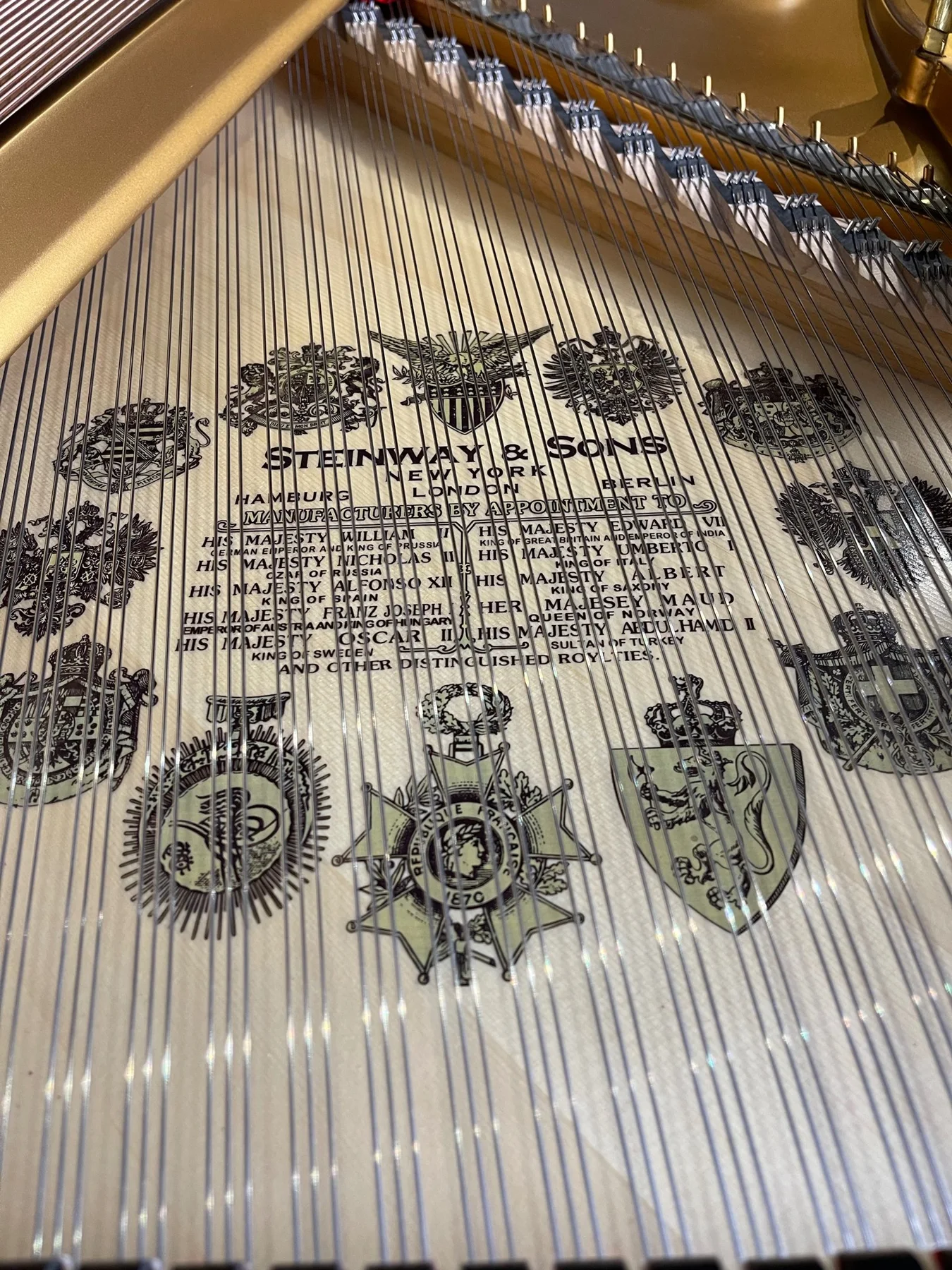
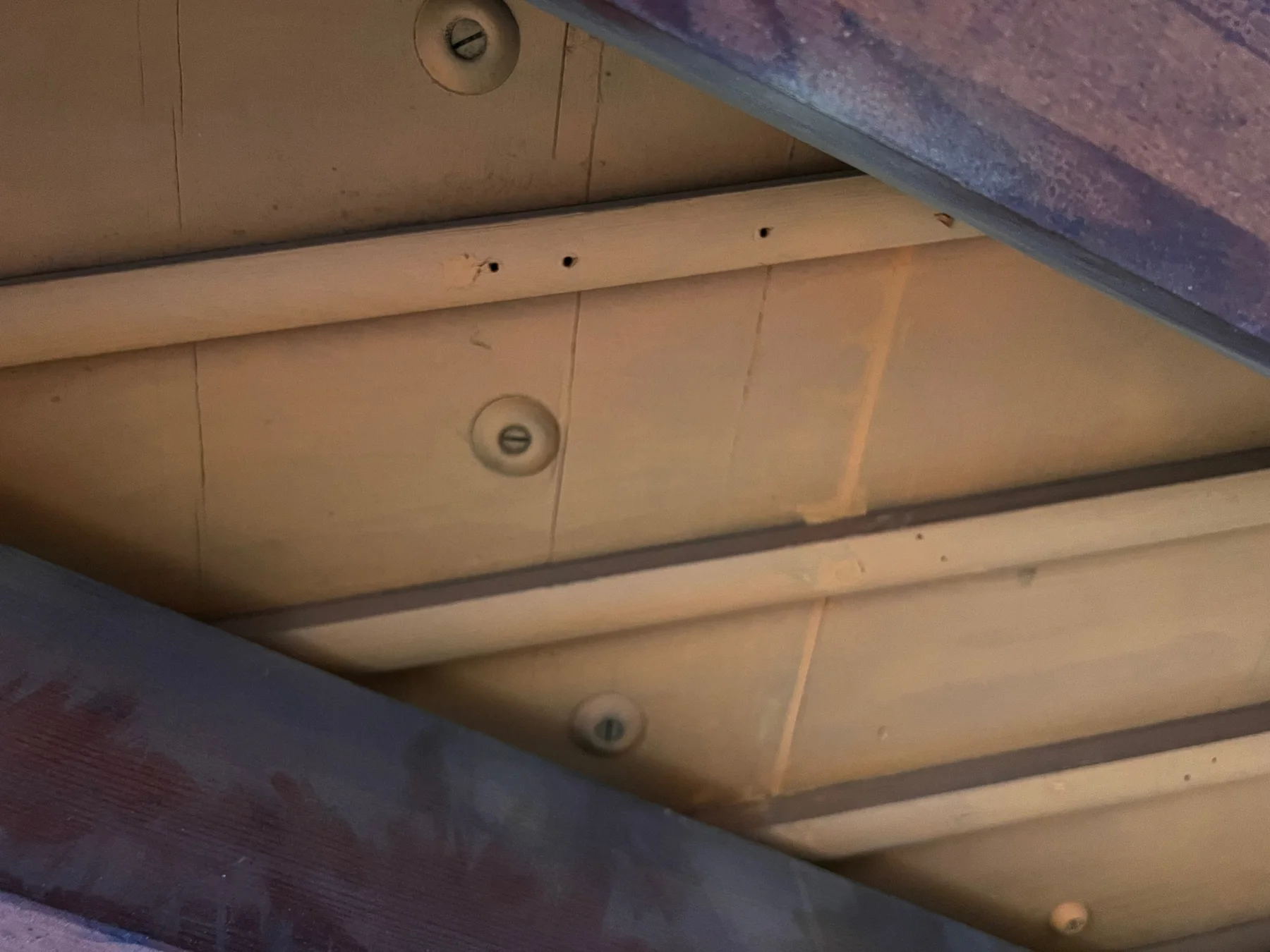
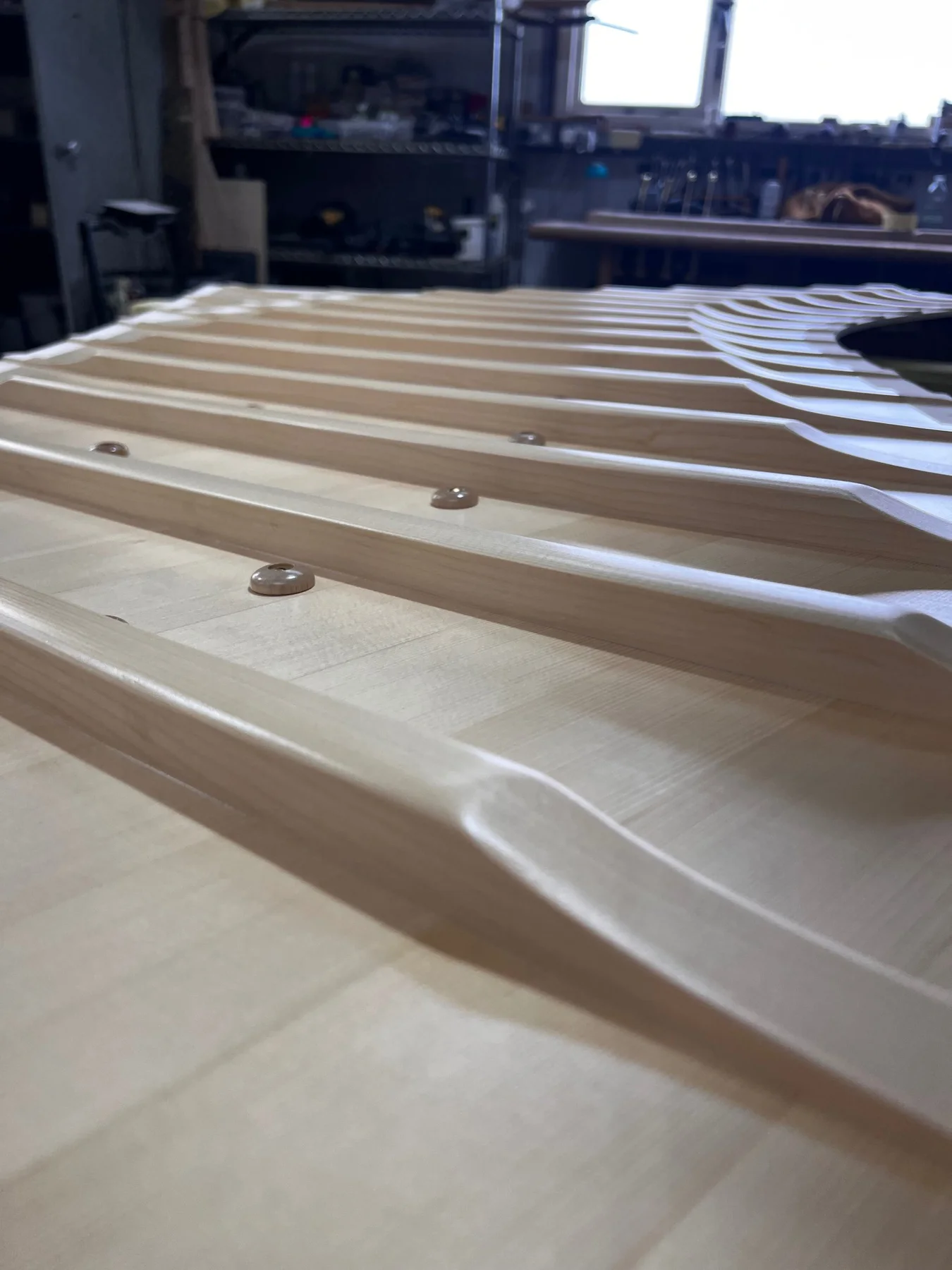
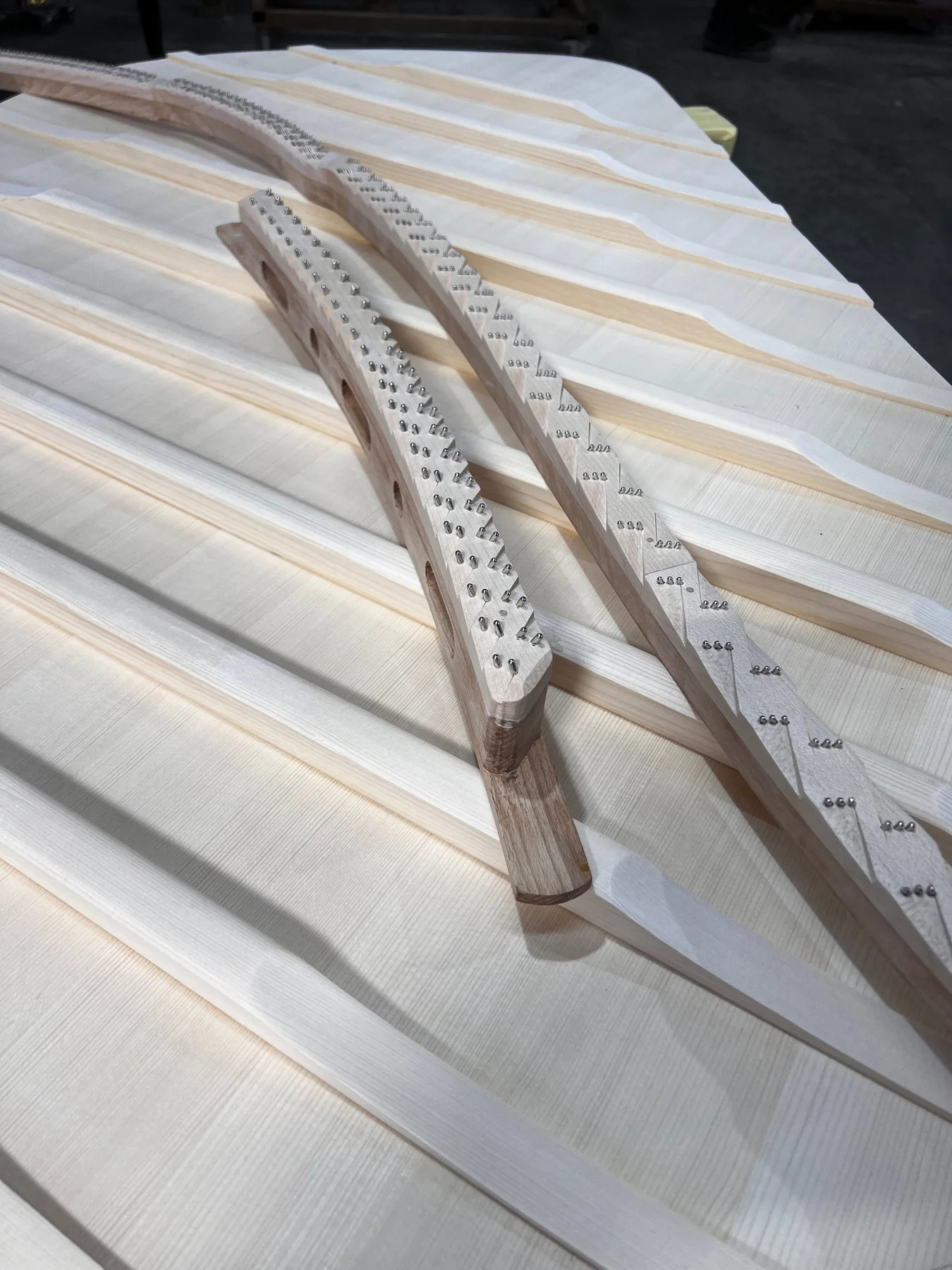
The original workshop account records a board with a 12 mm shim, putty and paint used to conceal the repair. The workshop replaced that board. Each restoration begins with understanding what has happened to the instrument before it reaches the bench.
YOUR QUESTIONS
The workshop uses slow-grown Sitka spruce and describes sourcing it from the same supplier as major piano manufacturers.
Replacement may be recommended following an assessment of the board, its crown, structure and tonal performance. The aim is to recover resonance and sustain; the appropriate work depends on the individual instrument.
The original soundboard page describes approximately four to five weeks for a scope including the tuning plank, frame regilding and restringing. Other rebuild pages give longer schedules. This is historical guidance, not a promised completion time: Paul will confirm the scope and schedule for your piano.
The workshop describes access to a range of original styles and the ability to reproduce an unusual decal when a replacement cannot be sourced. Discuss the maker and design with Paul.
Yes, visits can be arranged with the workshop during rebuilding. Please contact Paul to agree a suitable time.
The workshop’s aim is to recover the instrument’s tonal character, resonance and sustain. The outcome also depends on the complete piano and its preparation. Ask about ongoing care and the conditions in which it will be kept.
BLOG & GUIDES
WORKSHOP NOTES · 2024
What lies beneath a beautiful cabinet, and the questions to ask before choosing a rebuilt piano.
Read the article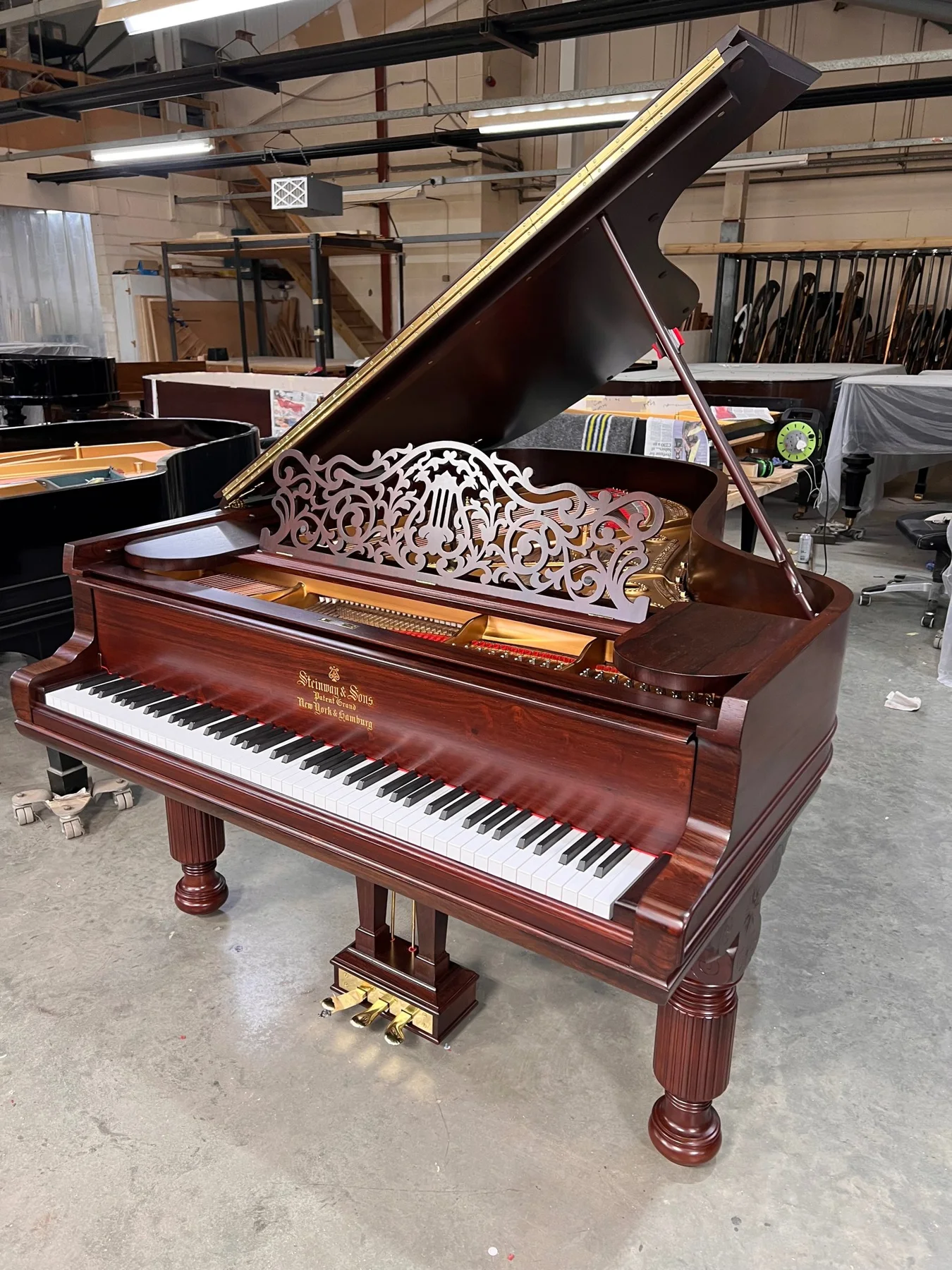
THREE BRIDGE MILL · BUCKINGHAMSHIRE
Speak with Paul Leverett, Founder, about the pianos for sale. Arrange a video call to discuss an instrument or a private workshop visit to play and compare the pianos.
Workshop visits by appointment. Your requested time is confirmed personally.